

What Is 3 Step Detailing?
If you have ever seen a “three step” package on a detailing menu, you might wonder what you are actually paying for. In most shops, 3 step detailing is a structured exterior process that moves from cleaning, to refining the paint, to protecting it. The goal is simple: remove bonded grime, improve gloss and clarity, and add a protective layer so the finish stays easier to maintain.
Because vehicle condition varies a lot, the exact products and tools can differ. But the logic of the process stays consistent, and that consistency is what makes it a popular upgrade over a basic wash and wax.
The Big Idea Behind Three Steps
Think of your paint like a smooth surface that collects contamination and tiny defects over time. Road film, brake dust, tree sap, bug residue, and industrial fallout can stick to the clear coat. Sun, weather, and washing can add fine scratches and haze. A three step approach addresses those issues in the right order, so you are not sealing in grime or polishing over contamination.
Step 1: Clean and Decontaminate
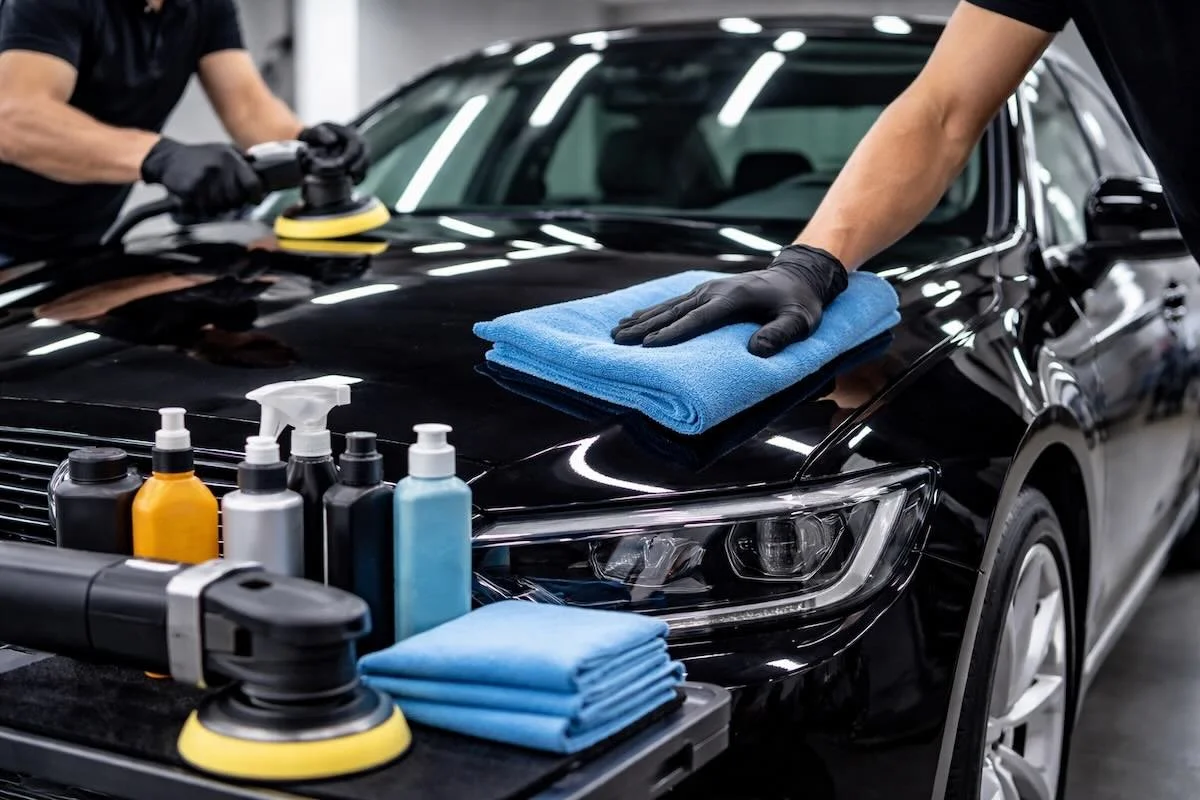
This first phase is about getting the surface truly clean, not just “looks clean from ten feet away.” A proper wash removes loose dirt safely, and decontamination targets what washing leaves behind.
Common parts of Step 1 may include:
A careful hand wash using safe wash methods
Wheel and tire cleaning
Chemical or mechanical decontamination to remove bonded contamination
Why it matters: polishing on a contaminated surface can create more marring, and protection products bond better to clean paint.
Step 2: Polish and Refine the Paint
This is the “make it look better” step. Polishing refines the clear coat to reduce visible swirls, light scratches, oxidation haze, and dullness. The detailer chooses pad and polish combinations based on paint hardness and the level of defects.
What to expect from this step:
Noticeably improved gloss and clarity in most lighting
Reduced appearance of wash swirls and light scratching
Better depth and reflection, especially on darker colors
A quick reality check: deeper scratches that catch a fingernail, or defects that go through the clear coat, may not fully disappear. A reputable shop will set expectations before they start.
Step 3: Protect and Finish
Once the paint is clean and refined, it needs protection. This last step adds a layer that helps resist water spotting, slows down contamination buildup, and makes regular washing easier.
Protection options often fall into these categories:
Wax
Paint sealant
Ceramic coating style protection, depending on the package
The main difference is durability and maintenance needs. Many drivers choose a longer lasting protectant if the vehicle sees harsh sun, winter road chemicals, or frequent highway driving.
How 3 Step Detailing Differs From a Basic Detail
A basic exterior service often focuses on cleaning and a quick protectant. A three step process typically puts more emphasis on paint refinement, which is where the most visible transformation comes from.
If your vehicle looks clean but still seems dull in sunlight, or you notice spider webbing swirls at night under streetlights, that is often a sign you will benefit from the polishing stage.
Who Should Consider This Service?
3 step detailing is a strong fit for drivers who want a noticeable visual upgrade without jumping straight to the most intensive paint correction packages.
It is especially useful if:
The paint looks hazy or flat in direct sun
You see swirls after washing, even when the car is clean
You are preparing to sell the vehicle or return a lease
You want protection to last longer and wash easier
What to Ask Before Booking
Menus can vary, so it helps to ask a few practical questions so you know what “three step” means at that specific shop.
Good questions include:
Does Step 2 include machine polishing, and how many polishing stages are performed?
What protection product is used in Step 3, and what maintenance does it require?
Are wheels, tires, and trim included, or priced separately?
A clear answer here usually signals a well run operation.
FAQs
Does 3 step detailing remove all scratches?
It usually reduces light scratches and swirls, but it may not remove deep damage. Results depend on paint condition and defect depth.
How long does a three step service take?
It often takes several hours to a full day, depending on vehicle size and paint condition. Heavily contaminated paint takes longer.
Is it safe for older paint?
In most cases, yes, when done by a trained detailer who inspects paint condition first. Thin or failing clear coat needs extra caution and honest expectations.
Final Thoughts
A three step process is popular because it follows a smart order: clean thoroughly, refine the finish, then lock in protection. When done correctly, it can make a daily driver look sharper in real world lighting and stay easier to maintain between washes.