
Fleet Detailing vs. In-House Washing: Which Actually Saves Money?
Keeping vehicles clean is not just about looks. Clean fleets protect paint, reduce corrosion risk, support safety checks, and reinforce your brand in every driveway and jobsite. The money question is tougher than it sounds, because the cheapest option on paper can become expensive in labor hours, downtime, and inconsistent results.
This guide breaks down Fleet Detailing vs. In-House Washing through the cost categories that actually move your budget, so you can decide with confidence.
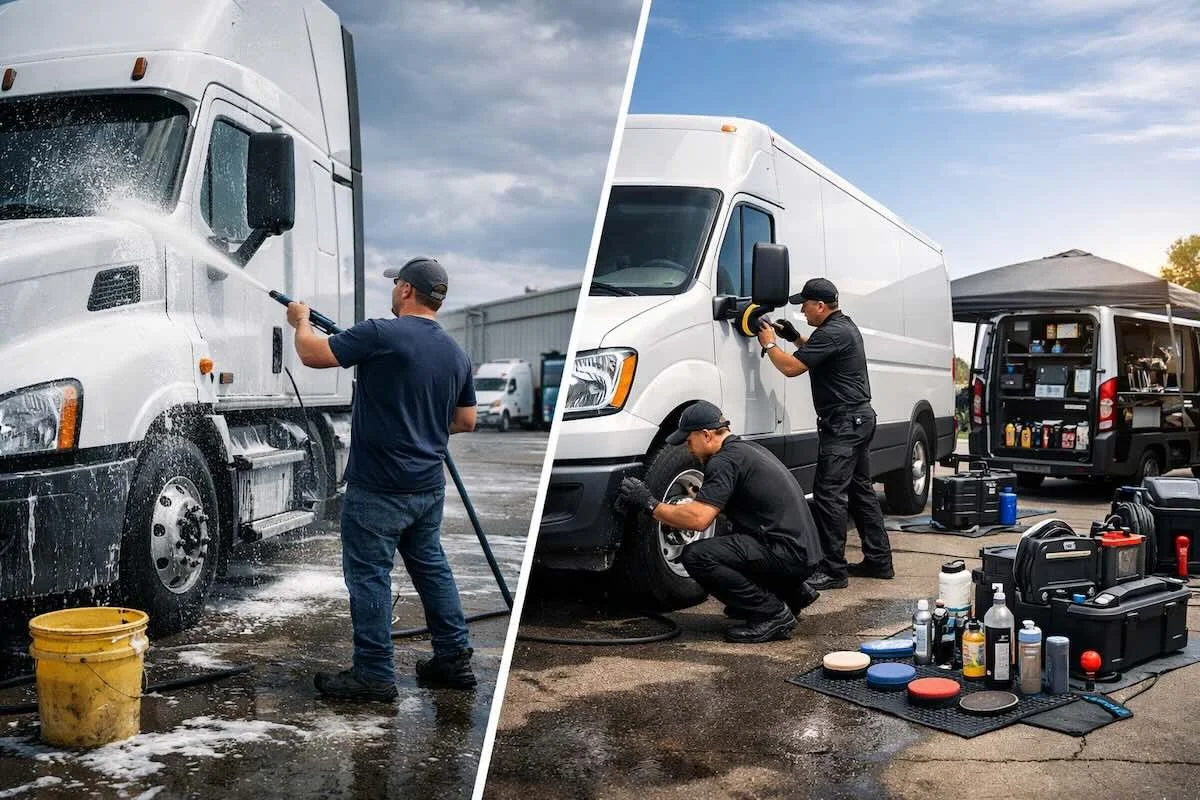
What “Saving Money” Really Means for a Fleet
Most fleets focus on the price per wash. The bigger savings often live elsewhere, especially as your vehicle count grows.
A practical definition of “saves money” includes:
Total labor time, including setup and cleanup
Vehicle downtime and scheduling friction
Rework, damage risk, and premature wear
Compliance and facility overhead
If you only compare invoices, you can miss the costs that quietly expand across the operation.
The True Cost of In-House Washing
In-house washing can be cost-effective in certain setups, especially if you already have space, drainage, and staff capacity. It becomes less predictable when it competes with your core work.
Labor is the biggest line item, even when you do not track it
Someone has to move vehicles, stage hoses, mix chemicals, wash, dry, and reset the area. That time often lands on technicians, drivers, or yard staff who already have higher-value tasks.
If your team is washing “between jobs,” the hidden cost is the work that did not happen.
Equipment and infrastructure add up over time
A homegrown wash program usually grows into more than a hose and soap. Common cost drivers include pressure washers, reels, brushes, towels, vacuums, chemical storage, repairs, and replacements. If you wash on-site, drainage and runoff handling can also become a real operational concern.
Consistency can be hard to maintain
Fleet cleanliness is a standard, not a suggestion. When washing is shared across shifts, results vary. Some vehicles get detailed attention, others get a fast rinse. That inconsistency can create:
More customer-facing appearance complaints
Faster paint degradation from improper tools
Missed grime buildup in high-wear areas like door jambs and step plates
Weather and seasonality can break your routine
Cold snaps, wind, dust, and muddy seasons can turn washing into an all-day ordeal, or stop it entirely. When washing slips for weeks, catching up later often costs more than staying on schedule.
The Real Cost Structure of Fleet Detailing
Fleet detailing is not always “premium.” Many providers offer fleet-focused packages built for frequency and speed, not showroom perfection. The cost advantage often comes from reduced disruption and better outcomes per hour.
You pay for a result, not an internal process
A professional crew arrives with trained labor, standardized methods, and dedicated tools. That matters when you are trying to keep drivers driving and techs producing.
Downtime is usually the make-or-break factor
If vehicles can be serviced on-site or in a tight rotation, the time savings are immediate. Less time moving vehicles, less time staging equipment, and fewer surprises.
Quality control reduces rework and long-term wear
Professionals tend to follow repeatable processes, including safer wash methods and appropriate chemical use for paint, wraps, and decals. Better technique can reduce swirl marks and premature fading, which protects resale value and brand appearance.
A Fair Comparison: Where the Money Shifts
When comparing Fleet Detailing vs. In-House Washing, the “cheaper” option depends on which cost you are trying to control.
In-house can save money when:
You already have a compliant wash area and drainage
You have consistent staff time that is truly available
Your fleet is small and centrally parked
You can enforce one standard process every time
Fleet detailing can save money when:
Your labor is better used on revenue work
Vehicles are scattered, rotated, or time-sensitive
You need consistent appearance for customer sites
You want predictable scheduling and outcomes
Neither approach is automatically better. The savings usually come from reducing operational friction, not chasing the lowest price.
The Hybrid Approach Many Fleets Use
A blended program is often the most cost-stable option. Use in-house washing for quick rinses and safety visibility, then use fleet detailing on a set cadence for deeper cleaning.
A simple hybrid structure looks like this:
Light in-house rinse for mud, salt, and windows as needed
Scheduled professional service for interiors, wheels, and paint-safe washes
Seasonal deep clean after winter, or before peak busy months
This approach prevents the “fall behind, then pay more” cycle that fleets often experience.
How to Decide Without Guessing
You do not need complicated spreadsheets to make a smarter choice. You need a clean way to compare your reality.
Step 1: Track time, not just supplies
For two weeks, record how many total labor minutes go into washing, including setup and cleanup. Multiply by your true labor cost, not the lowest wage on the yard.
Step 2: Identify downtime pain points
Note how often washing causes delays, missed dispatch windows, or vehicle bottlenecks. Downtime costs are usually the silent budget killer.
Step 3: Define your cleanliness standard
Write a simple standard your team can recognize. For example, clean glass, readable markings, no heavy mud, and a presentable cab. If you cannot consistently hit the standard internally, outsourcing becomes easier to justify.
Step 4: Compare apples to apples
Ask any provider for a fleet-appropriate scope, including frequency, what is included, and how they handle scheduling. Then compare that against your real internal time cost.
Common Pitfalls That Inflate Costs
Even good programs fail for avoidable reasons. Watch for these issues, because they can make either option more expensive.
No defined standard, so results drift
Washing becomes a “when we can” task
Harsh chemicals or tools damage paint and decals
Interiors get ignored until odors and stains set in
Winter grime builds up, then requires intensive catch-up
Fixing these problems often saves more than switching methods.
FAQ
Is fleet detailing only for luxury or high-end vehicles?
No. Many services are built for work trucks, vans, and mixed fleets. The key is choosing a fleet scope that matches your needs.
How often should a fleet be cleaned to control costs?
It depends on weather, routes, and industry. A consistent cadence usually costs less than long gaps followed by heavy cleanups.
What should I ask a provider to confirm true value?
Ask what is included, how they minimize downtime, how they handle interiors, and how they protect paint and decals with safe methods.
Conclusion
The best choice is the one that reduces wasted labor, avoids downtime, and keeps quality consistent. Fleet Detailing vs. In-House Washing is less about preference and more about operational fit. If your team has capacity and the right setup, in-house can work well. If time, consistency, or scheduling is the struggle, professional service often wins on total cost.