

Can I Top Up Low Oil With Any Oil?
Low oil is one of those dashboard warnings you should not ignore. Even being a quart low can reduce lubrication, raise engine temperatures, and increase wear. The good news is that topping up is usually simple. The tricky part is choosing the right oil when you are standing in a store aisle, or staring at whatever bottle is in your garage.
You can sometimes top up with a different oil and be fine for the short term. But “any oil” is not always safe, and there are a few situations where the wrong choice can cause real problems.
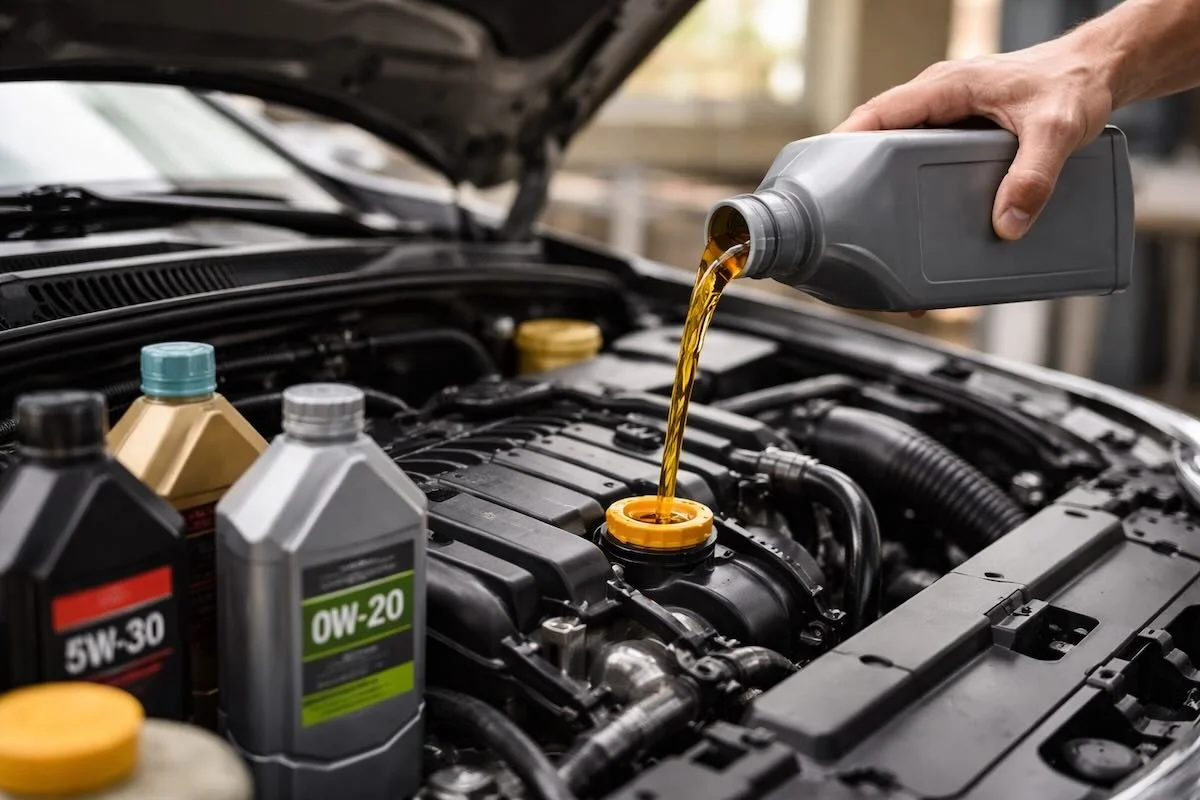
Why the “right oil” matters
Engine oil does more than lubricate. It also helps cool parts, keep seals conditioned, suspend contaminants, and protect against corrosion. The oil you add changes the overall blend in your engine. If it is too thin, oil pressure can drop. If it is too thick, it may not flow well at cold start. If it lacks the right specifications, it may not protect modern emissions equipment or turbochargers the way your engine expects.
The safest rule for topping up
If you can, match these three things:
The viscosity grade shown in your owner’s manual, often printed like 0W-20, 5W-30, or 10W-40
The oil type your vehicle uses, such as conventional, synthetic blend, or full synthetic
The specification your vehicle calls for, which may be listed on the bottle as an industry rating, or a manufacturer approval
If you can match viscosity and the general type, you are usually in good shape for a top up. Matching the specification is especially important for newer vehicles.
When it is usually OK to top up with a different oil
There are times when topping up with a different oil is the smart move, because running low is worse.
Same viscosity, different brand
This is almost always fine for topping up. Oils that meet common standards are designed to be compatible.
Different synthetic level, same viscosity
Mixing full synthetic with synthetic blend, or even with conventional, is typically acceptable for a top up. The engine will not suddenly “reject” the mixture. The main downside is you may reduce some of the benefits of the higher quality oil until your next full change.
Small amount of a close viscosity in an emergency
If your manual calls for 5W-30 and you can only find 5W-20 or 10W-30, adding a small amount to get you safely home is generally better than driving with the oil level below the safe range. The engine will run on a mixed viscosity, but it is not ideal as a long term plan.
When “any oil” can be risky
Some engines are picky. And some oil choices create avoidable issues.
Using the wrong viscosity by a lot
Jumping from 0W-20 to 10W-40 is a big change. Cold flow and oil pressure behavior can shift, especially in winter. If you are in a cold climate, thicker oil can be slow to circulate at startup, which is when engines need protection most.
Using oil that does not meet required specifications
Many modern engines require specific performance ratings. This matters a lot for:
Turbocharged engines, which run hotter and stress oil more
Direct injection engines, which can be prone to deposits
Vehicles with emissions systems that are sensitive to certain additives
If your vehicle requires a specific approval, topping up with an oil that lacks it can increase deposits, wear, or emissions system problems over time.
Topping up with diesel oil or specialty oils
Diesel engine oils, racing oils, and break-in oils have different additive packages. They are not automatically wrong, but they are not a safe default for a gasoline daily driver. Use them only when you know they meet your vehicle’s requirements.
If your car has very low oil repeatedly
If you need to top up often, the bigger issue is why the oil is low. Adding “any oil” does not solve leaks, burning oil, or maintenance problems. In this case, it is better to treat topping up as a short term safety step, not a routine.
A quick, practical topping up process
How to check and add oil without overfilling
Park on level ground and let the engine sit for a few minutes after shutting off. Check the dipstick, wipe, reinsert, then read again. Add oil in small amounts, like a quarter to a half quart at a time, and recheck. Overfilling can create foaming and pressure issues, which can be as harmful as running low.
How low is too low
If the oil level is below the minimum mark on the dipstick, top up before driving. If there is no oil visible on the dipstick, do not start the engine until you add oil and confirm the level rises into a safe range.
What to do after you top up with a different oil
If you topped up with something that was not a perfect match, treat it as a temporary fix.
Drive normally, avoid hard towing or aggressive acceleration if you can
Plan to return to the correct oil at your next oil change
If you added more than about a quart of a different viscosity or spec, consider scheduling an oil change sooner
Most engines will tolerate a small mismatch without drama, especially for a short period. The goal is to get the level safe, then get back to the manufacturer recommended oil.
Common reasons oil is low in the first place
Low oil is often a symptom. If it happens again, look for clues:
A fresh spot under the car after parking, which suggests a leak
A burning smell or bluish exhaust smoke, which can suggest oil burning
Oil on the engine cover or around the oil filter area, which can happen after service
A longer interval since your last oil change than you intended
If you are not sure, a quick inspection can prevent a bigger repair.
FAQ
Can I mix synthetic and conventional oil when topping up?
Usually yes for a top up, especially if viscosity matches. It may reduce some benefits until your next oil change.
What if I do not know what oil is in my engine right now?
Use the viscosity recommended in your owner’s manual. If the vehicle is new to you, plan an oil change soon so you can reset to the correct oil and interval.
Is it better to add the wrong oil or drive with low oil?
In most cases, adding a small amount of a close match is safer than driving low. Running low increases wear quickly.
Conclusion
You do not need the exact same brand to top up low oil. But you should avoid the idea that any oil will do. Match viscosity first, then aim for the right type and specifications. If you must use a close alternative, keep it temporary and get back to the correct oil at the next change.